


For most of ancient history, Egypt was the one doing the conquering. Nubia, the region to its south along the Nile in what is now Sudan, spent centuries as an occupied territory, its gold mines and soldiers feeding Egyptian power. Then, around the 8th century BCE, the relationship flipped entirely. A Nubian kingdom called Kush didn’t just break free of Egyptian control — it marched north, took the Egyptian throne, and ruled the entire Nile Valley as pharaohs in their own right.
This is the story of how that happened: centuries of cultural exchange under occupation, a slow buildup of independent Kushite power, and a conquest that put African kings on Egypt’s throne for close to a hundred years.
Nubia under Egyptian rule
Long before Kush rose to power, the region was already deeply entangled with Egypt, though not as an equal. Egyptian pharaohs occupied Nubia repeatedly over the centuries, and by the reign of Thutmose I in the 15th century BCE, Egyptian control extended deep into what is now Sudanese territory. The Egyptians divided the region into two administrative zones: Wawat in the north and Kush in the south, governed through a viceroy answerable to the pharaoh himself, with Egyptian officials, traders, and priests staffing the administrative centers along the Nile.
What’s notable is what happened outside those Egyptian outposts. Nubian communities largely kept their own customs, crafts, and traditions intact, absorbing Egyptian religious and cultural influence on their own terms rather than having it imposed wholesale. Interestingly, some of the strongest Egyptian cultural influence on Nubia didn’t come from military occupation at all — it came from an earlier period of Egyptian weakness. During the Second Intermediate Period, when Egypt’s control over Nubia loosened as the Hyksos invaded from Asia, large numbers of Nubians served as mercenaries in Egyptian armies fighting to expel the invaders. That experience, fighting alongside Egyptians rather than under their garrisons, did more to spread Egyptian culture into Nubia than generations of occupation had.
By the time Egypt reasserted full control under the New Kingdom, a genuinely blended culture had taken root in Kush — Egyptian in many of its outward forms, but shaped just as much by the African societies further south, and never simply a copy of Egypt transplanted onto Nubian soil.
Why Kush mattered to Egypt
Kush wasn’t just a subject territory to be governed and forgotten. Its geography made it valuable in its own right. The kingdom sat astride major trade routes connecting Egypt to the Red Sea and linking the Nile corridor to lands further south and west, funneling exotic goods and raw materials north into Egyptian hands. Its fertile land along the river supported agriculture, and its hills held gold and emerald mines that helped bankroll Egyptian wealth and monument-building for centuries. On top of the economic value, Nubians earned a reputation as skilled soldiers, and Kushite troops became a regular presence in Egyptian armies.
All of this meant that whoever controlled Kush controlled a genuinely important asset — which is exactly why its eventual independence, and later its conquest of Egypt, mattered so much.
Egypt’s decline creates an opening
Empires rarely lose their grip on distant provinces while they’re strong at home, and Egypt was no exception. As the New Kingdom wound down around the 11th century BCE, Egyptian central authority weakened considerably. The Egyptian viceroys who had governed Kush on the pharaoh’s behalf found themselves with less and less oversight from the north, and with the backing of Nubian armies, they gradually transformed from Egyptian appointees into effectively independent rulers.
By the 8th century BCE, the kings ruling Kush no longer came from Egyptian-appointed officials at all. They descended from hereditary lines of Egyptianized Nubian chiefs with no political or family ties back to Egypt. Kush had, in effect, become its own kingdom in every meaningful sense — culturally influenced by Egypt, but politically and dynastically entirely Nubian.
Kashta lays the groundwork
The first major step toward Kushite power over Egypt itself came under a king named Kashta. Rather than simply defending Kushite independence, Kashta pushed north and brought Upper Egypt — the southern part of the country — under Kushite control. It was a significant expansion, but Kashta didn’t live to see the job finished. That fell to his son.
Piye conquers Egypt
Piye, formerly known by the Greek-influenced name Piankhi, took what his father had started and finished it decisively. Reigning from roughly 750 to 719 BCE, Piye extended Kushite control over the whole of Egypt, all the way to the Mediterranean coast. What had been a campaign to secure Kush’s own borders and interests became a full-scale conquest of the most powerful kingdom in the region.
Piye’s motivations weren’t purely about territorial ambition. Kushite kings had inherited a deep reverence for many of the same gods and religious traditions Egypt held sacred, and Piye positioned his conquest, at least in part, as a restoration of proper religious and political order in a fractured Egypt, rather than as a foreign invasion. That framing mattered: it helped Kushite rule over Egypt gain a degree of legitimacy that a purely military occupation might never have achieved.
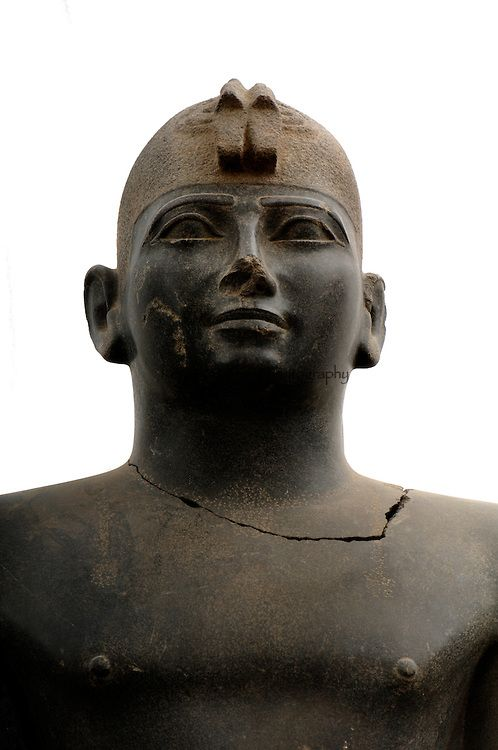
The 25th Dynasty: Kush on Egypt’s throne
With Piye’s conquest complete, Kushite kings became pharaohs of Egypt’s 25th Dynasty, ruling the unified Nile Valley from the Mediterranean delta down to Kush’s own heartland near Napata. For the best part of a century, kings born and raised in Nubia sat on Egypt’s throne, commissioned Egyptian-style monuments, and presented themselves as legitimate successors within Egypt’s own royal tradition rather than outside conquerors.
This period marked the high-water mark of Kushite power. It’s also the origin of the term historians and popular writers alike now use for these rulers: the Black Pharaohs, a name that reflects both their African origins and the very real fact that they governed Egypt as its recognized kings, not as puppet rulers or occupying force.
The Assyrian invasion ends Kushite rule over Egypt
Kushite dominance over Egypt didn’t last, and its end came from outside the Nile Valley entirely. In 671 BCE, the Assyrian Empire invaded Egypt, bringing with it iron-forged weapons that gave Assyrian armies a decisive military edge over Kushite forces still relying on older technology. Kushite armies under Taharqa, one of the dynasty’s most notable kings, fought to hold Egypt but were ultimately outmatched. By 654 BCE, the Kushites had been pushed entirely out of Egypt and back to Nubia, retreating to the relative safety of their capital at Napata.
The retreat marked the end of Kush as an Egyptian-ruling power, but not the end of Kush itself.
What came after: a kingdom that outlasted its conquerors
This is where many accounts of Kush stop, treating the loss of Egypt as the end of the story. It wasn’t. Kush continued as an independent kingdom along the middle Nile for roughly another thousand years, moving its capital south from Napata to Meroë and developing a culture that grew increasingly distinct from Egypt even as its neighbor to the north fell under Persian, Greek, and eventually Roman influence.
That later Kushite civilization is where Sudan’s famous pyramid fields come from — proof that a kingdom driven out of Egypt didn’t fade quietly, but built one of the most extensive pyramid landscapes in the ancient world on its own terms, centuries after Egypt itself had stopped building pyramids altogether.
This piece covers Kush’s rise to power over Egypt, but it’s only one chapter in a much longer story. For more on what came before and after this era, see the companion posts on the Black Pharaohs of Egypt’s 25th Dynasty, Jebel Barkal and its religious significance to both civilizations, and the pyramid fields of Meroë that Kush left behind after its retreat from Egypt.
Frequently asked questions
1. What was the Kingdom of Kush?
Kush was an ancient Nubian kingdom centered along the Nile in what is now Sudan, which grew from an Egyptian-occupied territory into an independent power that eventually conquered and ruled Egypt itself.
2. When did Kush rise to power over Egypt?
Kush’s conquest of Egypt was completed under King Piye, who reigned from roughly 750 to 719 BCE, though the groundwork was laid earlier by his father, Kashta.
3. Who was Kashta?
Kashta was a Kushite king who brought Upper (southern) Egypt under Kushite control, setting up the full conquest of Egypt that his son Piye would later complete.
4. Who was Piye?
Piye, also known as Piankhi, was the Kushite king who extended control over the whole of Egypt to the Mediterranean coast, becoming the founding pharaoh of Egypt’s 25th Dynasty.
5. What is the 25th Dynasty of Egypt?
The 25th Dynasty refers to the period when Kushite kings ruled Egypt as pharaohs, governing the unified Nile Valley from the Mediterranean delta down to Kush’s own heartland near Napata.
6. Who were the Black Pharaohs?
The Black Pharaohs is the name commonly used for the Kushite kings of Egypt’s 25th Dynasty, reflecting their Nubian origins and their status as recognized rulers of Egypt.
7. How long did Kush rule Egypt?
Kushite kings ruled Egypt for close to a century, from Piye’s conquest around 750 BCE until they were driven out by the Assyrians by 654 BCE.
8. Why was Kush able to conquer Egypt?
Kush’s conquest was made possible by Egypt’s political decline at the end of the New Kingdom, which allowed Kushite rulers, backed by Nubian armies, to grow independent and eventually powerful enough to invade.
9. Why did Kushite rule over Egypt end?
Kushite rule ended after the Assyrian Empire invaded Egypt in 671 BCE, using iron-forged weapons that gave them a military advantage over Kushite forces led by King Taharqa.
10. What happened to Kush after it lost Egypt?
Kush retreated to Nubia and continued as an independent kingdom for roughly another thousand years, eventually moving its capital south to Meroë.
11. Did Kush and Egypt share the same religion?
Kush worshipped many Egyptian gods and positioned itself as a restorer of proper religious order in Egypt, but it also maintained its own distinct religious traditions alongside them.
12. Was Kush culturally the same as Egypt?
No — Kush absorbed significant Egyptian cultural influence over centuries but developed its own language, writing system, and burial customs, remaining culturally distinct from Egypt even at the height of its Egyptian rule.
13. What role did Nubian mercenaries play in spreading Egyptian culture?
During a period of Egyptian weakness, large numbers of Nubians served as mercenaries in Egyptian armies, and that experience spread Egyptian culture into Nubia more effectively than generations of prior occupation.
14. Where was the capital of Kush before Meroë?
Before the capital moved south to Meroë, Kush was ruled from Napata, located near the sacred mountain of Jebel Barkal.
15. Is the Kingdom of Kush the same as Nubia?
Not exactly — Nubia is the broader region along the Nile south of Egypt, while Kush was the specific kingdom that rose to power within that region.
References
- Britannica — “Sudan: The Kingdom of Kush” — https://www.britannica.com/place/Sudan/The-kingdom-of-Kush
- Britannica — “Kashta” — https://www.britannica.com/biography/Kashta
- Britannica — “Piye” — https://www.britannica.com/biography/Piye
- Britannica — “Taharqa” — https://www.britannica.com/biography/Taharqa
- Britannica — “Cushite dynasty” — https://www.britannica.com/topic/Cushite-dynasty
- Britannica — “Kush” — https://www.britannica.com/place/Kush
- Britannica — “Napata” — https://www.britannica.com/place/Napata


